Deep Work in a Notification Economy
Every app on your phone is optimized to interrupt you. Protecting sustained attention has become a deliberate systems problem, not a willpower problem.
Cal Newport's case for 'deep work' — long, uninterrupted stretches of focused effort on cognitively demanding tasks — resonates with almost everyone who reads it, and almost nobody who tries to actually schedule it. The gap between wanting deep work and getting it isn't motivation. It's that the modern work environment is engineered, deliberately, to fragment attention, by companies whose business model depends on your attention returning to their product as often as possible.
An economy built on interruption
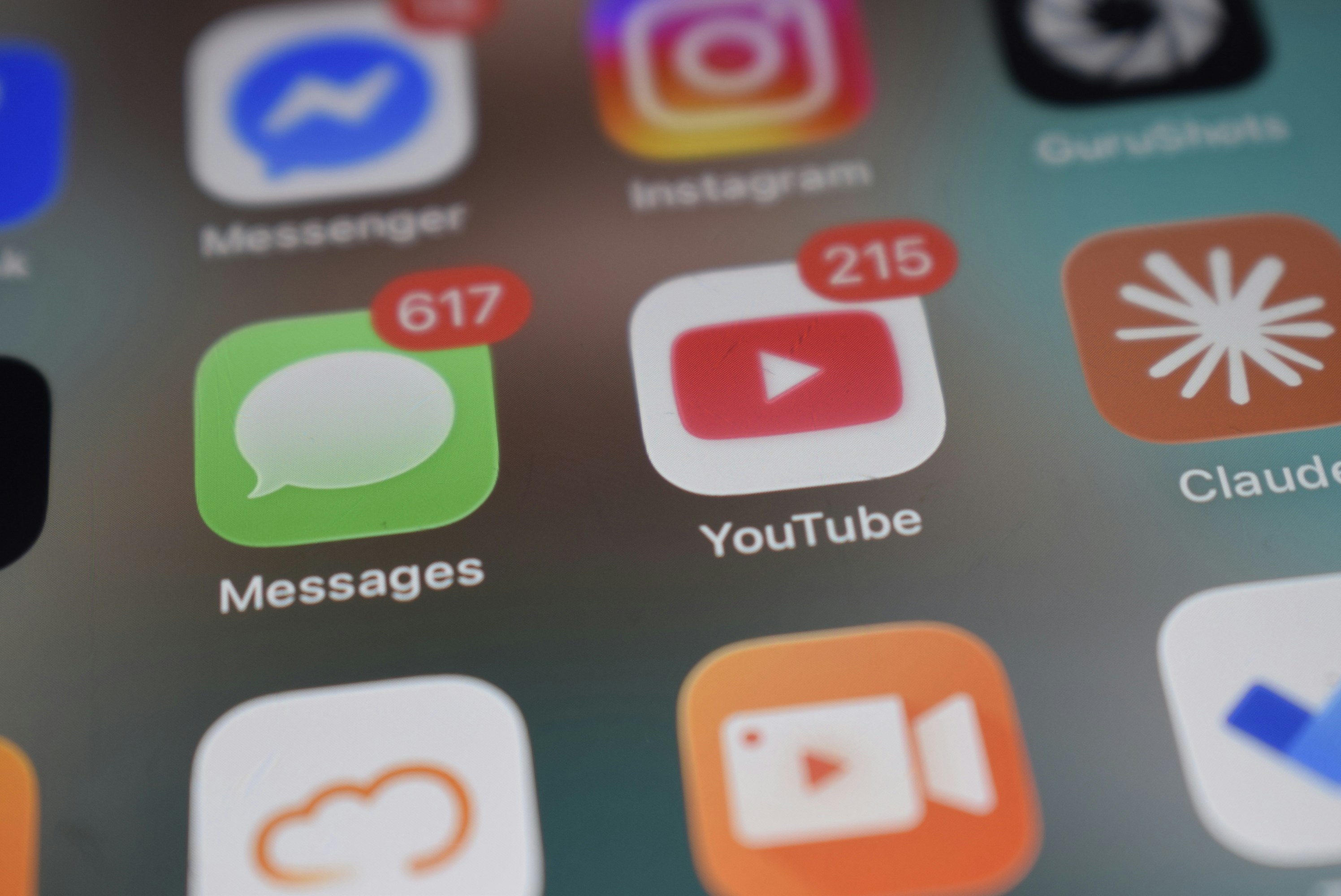
It's worth being precise about the incentives here. A notification is not a neutral event. Every major platform you use is, in some part of its design process, optimized for engagement — a metric that rewards frequent, short returns to the app far more than it rewards you finishing what you came to do. This isn't a conspiracy theory, it's a business model, openly discussed in product and growth literature. The practical consequence is that the default state of most digital tools is mildly, constantly adversarial to sustained attention, whether or not any individual notification feels malicious.
The real cost of a 'quick check'
Research on task switching consistently finds that returning to a complex task after an interruption doesn't just cost the interruption's duration — it costs a recovery period afterward, often ten to twenty minutes, during which your brain is still partially oriented toward whatever pulled you away. A single Slack notification checked mid-task can quietly cost half an hour of degraded thinking, even though the notification itself took four seconds to read. Multiply that across a typical day of a dozen or more 'quick checks' and the arithmetic becomes genuinely alarming.
This cost is also invisible in the moment. Nobody experiences the twenty-minute recovery tax directly; they experience it as a vague sense that the afternoon felt scattered, or that a task which should have taken an hour took three. The gap between what actually happened and what it felt like happening is exactly why this problem persists — it never presents itself clearly enough to demand a fix.
Treat focus time as a scheduled resource, not a hope
The people who consistently get deep work done don't have more willpower than everyone else. They treat concentration as a finite, schedulable resource, the same way they'd treat a meeting room: blocked in advance, visible on a shared calendar, and protected by a default of 'no' rather than negotiated in the moment when the temptation to check email arrives. The scheduling itself does most of the work — by the time you're mid-task and tempted, the decision has already been made by a past version of you who wasn't tempted.
This is where a workspace's structure does real psychological work. A dashboard that visually separates 'focus blocks' from 'reactive work' — with a different color, a different timer style, a different category — creates a small but real cue that this block of time operates under different rules. You're not just avoiding distraction through discipline; you've pre-committed to it through the environment, offloading the willpower requirement onto a system that doesn't get tired by 3pm the way you do.
Designing your environment, not just your schedule
Environmental design matters as much as scheduling. Phones in another room, notifications genuinely disabled rather than just muted, browser tabs closed rather than minimized — these aren't productivity clichés, they're removing the cheapest, lowest-friction paths back into distraction. Willpower is a poor match for a system engineered by well-funded teams to beat it; removing the option entirely is a much fairer fight.
The social layer nobody schedules for

A less-discussed source of interruption is social rather than technological: the coworker who drops by, the message that feels rude not to answer within minutes, the meeting invite that assumes your calendar is open by default. Protecting deep work often requires a small, explicit negotiation with the people around you — a shared understanding that a blocked calendar slot means genuinely unavailable, not merely 'unavailable unless something feels urgent enough to interrupt.' Teams that establish this norm collectively tend to protect far more focus time, in aggregate, than any individual using willpower alone against a culture that doesn't share the expectation.
This is also why visibility matters at the team level, not just the personal one. A deep-work block that's private and invisible to colleagues gets interrupted far more often than one that's visibly marked as protected on a shared calendar — not because colleagues are inconsiderate, but because they simply have no signal that anything different is happening during that hour. Making the block visible does a meaningful share of the protective work on its own, before any conversation even needs to happen.
What replaces the interruption, not just removing it
Simply removing notifications creates a vacuum that old habits are quick to fill — the reflexive phone check that happens even with nothing to check. It helps to replace the interruption with something equally quick but non-disruptive: a single scratchpad note capturing the stray thought that would otherwise have triggered a phone pickup, reviewed later during a designated break. This gives the Zeigarnik-style itch somewhere safe to go without actually breaking the block.
Measuring what deep work actually protected
The clearest signal that a deep work system is working isn't a feeling of virtue — it's a measurable one: fewer but larger completed chunks of your hardest projects, and a visible drop in the number of context switches logged in a day. If your systems can show you that trend line moving, you'll trust the practice enough to keep defending it against the next thing that wants to interrupt you, which, this week and every week after it, there will always be one.
A realistic starting point

You don't need four hours of pristine focus on day one. Ninety protected minutes, genuinely protected, is enough to notice the difference between deep and shallow output. Build from there, and let the visible evidence of better work — not a rule you're trying to obey — be the reason you keep the block on the calendar next week.