The Planning Fallacy: Why Your Estimates Are Always Wrong
A well-known cognitive bias explains why 'this will only take an hour' almost never does — and what a better planning system looks like.
Ask anyone to estimate how long a task will take, and they will almost always be wrong — not randomly wrong, but systematically, predictably optimistic. Psychologists call this the planning fallacy: our tendency to underestimate the time, cost, and risk of future actions, even when we have direct evidence from past experience that similar tasks took longer. It is one of the most well-replicated findings in behavioral science, and one of the least acted upon, because knowing about a bias turns out to be a poor defense against it.
A history of getting it wrong on purpose
The planning fallacy was first named by Daniel Kahneman and Amos Tversky in 1979, but its most famous demonstration came later, when Kahneman himself was part of a team writing a national curriculum. The group estimated it would take about two years. It took eight.
What makes the story remarkable is that partway through, Kahneman asked a colleague with direct experience of similar projects how long they typically took — and got an answer close to seven years, delivered with a shrug, from someone who was still, in that same conversation, estimating their own project at two.
Why your brain lies to you about time

The planning fallacy persists because when we imagine a future task, we picture the best-case execution path. We see ourselves writing the report in one sitting; we don't see the Slack message that interrupts us, the dependency that's blocked, or the meeting that runs long.
This is sometimes called the 'inside view' — reasoning from the specifics of the plan in front of you, rather than the 'outside view' of how similar plans have actually gone in the past.
The inside view feels more rigorous, because it's detailed and concrete: you can point to the steps. But detail is not the same as accuracy. A plan with fifteen precise steps and a plan with three vague ones are equally vulnerable to the same blind spot, because neither one incorporates the base rate of how these things actually go once real people and real interruptions get involved.
Experts are not exempt
One of the more sobering findings in this area is that expertise barely helps. Software engineers, who plan for a living and who are, on average, keenly aware that estimates run over, still underestimate their own tasks at roughly the same rate as novices.
Awareness of the bias reduces it only slightly, because the bias operates at the level of imagination, not knowledge — you can know, in the abstract, that projects run long, while still failing to apply that knowledge to this specific project sitting in front of you right now, which obviously feels different.
The fix isn't willpower, it's data
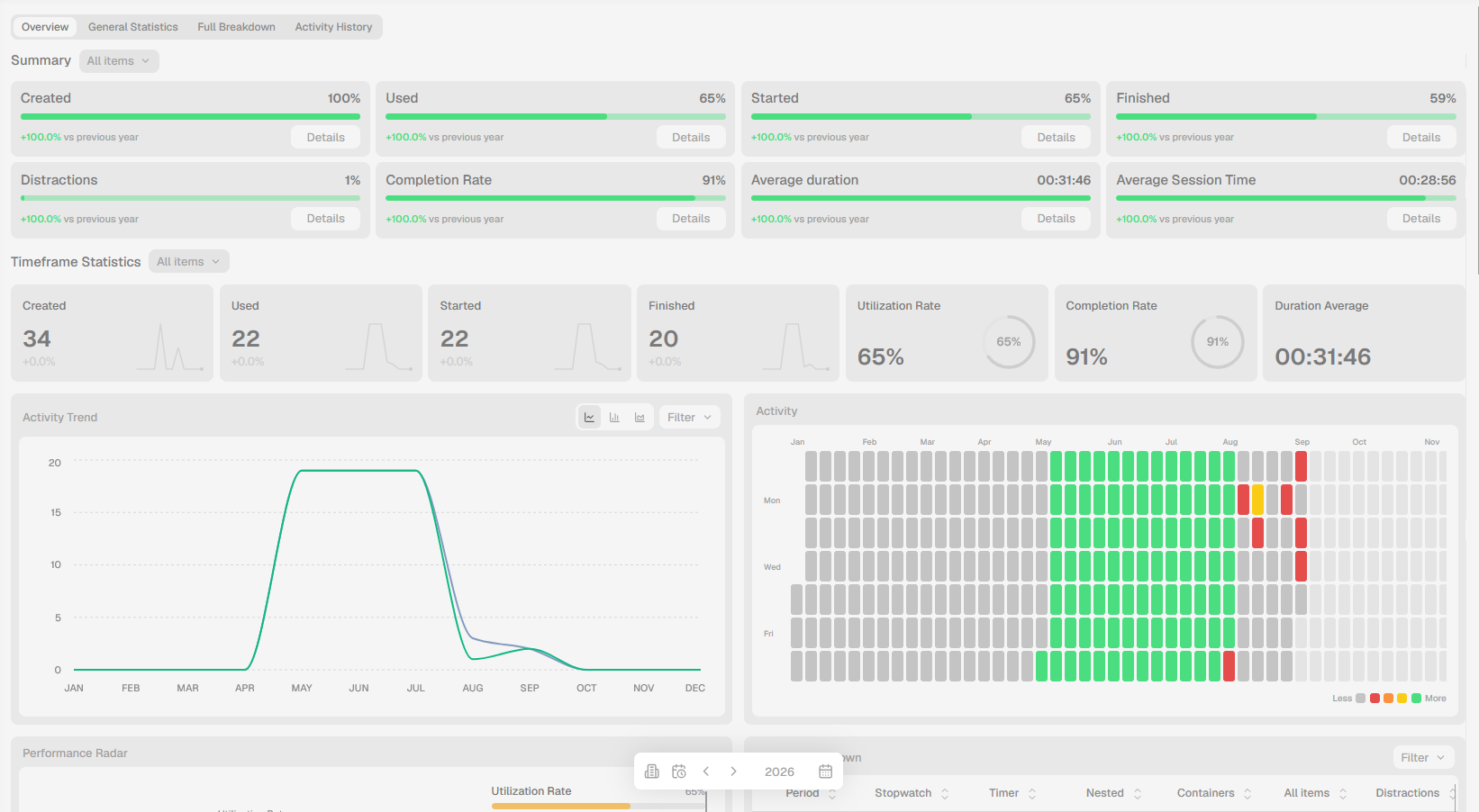
Trying to 'estimate better' through sheer discipline rarely works, because the bias is baked into how we simulate the future, not a lack of effort or attention. What actually works, according to both the research and a fair amount of applied project-management practice, is closing the loop between estimate and outcome: logging how long things actually take, categorizing that time by the kind of work it was, and letting the pattern — not your gut — inform the next estimate.
This is sometimes called reference-class forecasting, and it is deliberately boring: you're not trying to reason your way to a better number, you're trying to look up a better number from your own history.
This is precisely why time tracking tied to categories, rather than a flat stopwatch, matters so much. A single number ('I worked 6 hours today') tells you almost nothing about your planning accuracy. Knowing that 'deep work' sessions in your planner consistently run 40% longer than scheduled, while 'admin' tasks consistently run shorter, gives you a correction factor you can actually apply next time you plan a week — a multiplier grounded in your own real behavior rather than your optimistic imagination of it.
Building the habit
Start small: pick one recurring category of work, track it for two weeks without changing your behavior, and compare your estimates against the logged reality at the end. The gap you find will almost certainly surprise you, and that surprise is the beginning of a planning system that's honest about how long things really take.
Once you have that multiplier for one category, extend it to a second, then a third — the goal is not a perfect model of your time, but a set of correction factors accurate enough to stop the same surprise from repeating every single week.
Why estimates get worse under pressure, not better
There's a counterintuitive wrinkle worth naming: estimation accuracy tends to get worse, not better, precisely when the stakes are highest. When a deadline is looming or a stakeholder is watching, the incentive to produce an optimistic number goes up, even though the actual uncertainty in the work hasn't changed at all.
This is sometimes framed as a purely motivational problem — people 'lowballing' estimates to look competent — but it's just as often the planning fallacy itself, amplified by the same pressure that makes the inside view feel more urgent and more vivid than the outside view of past experience.
The practical implication is that the moments when you most need a reference-class estimate — a tight deadline, a high-visibility project — are exactly the moments you're least likely to trust one, because a data-backed number often looks less optimistic than the number you'd like to be true.
Building the habit of consulting your own historical multipliers before a project starts, rather than after the estimate has already been given out loud in a meeting, is what keeps this pressure from quietly corrupting the number.
Applying this beyond solo work
The same correction applies, with an extra layer of difficulty, to team estimates. A team's collective optimism compounds, because each person's individually optimistic estimate for their piece gets summed into a project timeline that inherits every individual bias at once, with no natural counterbalancing effect.
Teams that keep even a rough shared log of estimated-versus-actual for past projects — not for blame, but purely as a reference class — tend to negotiate deadlines from a noticeably more grounded starting point than teams relying purely on each person's fresh, in-the-moment gut feeling.
What this looks like a few months in
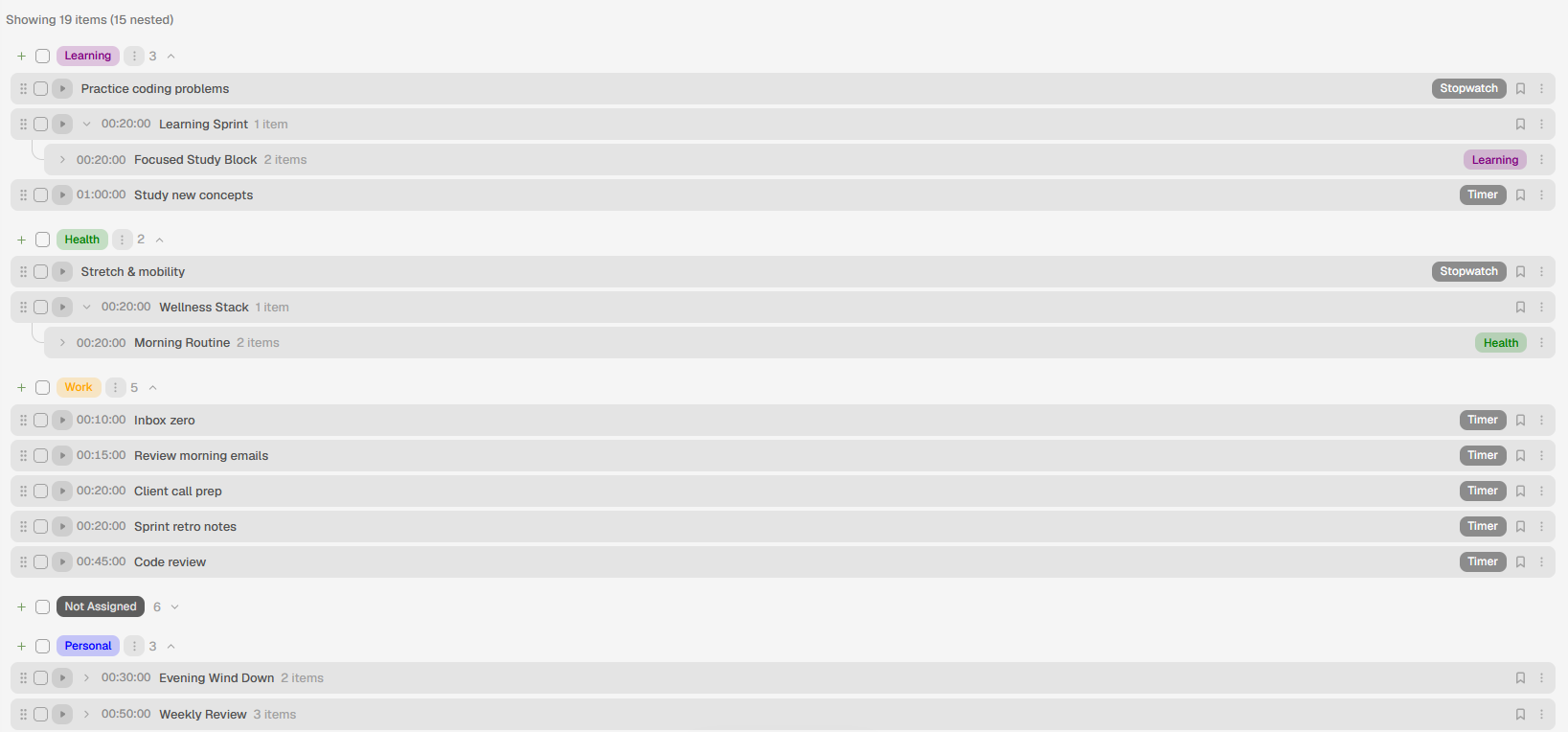
The people who stick with this long enough tend to describe a similar shift: planning stops feeling like an act of hope and starts feeling like an act of arithmetic. A two-hour block that used to be a guess becomes a number backed by six weeks of near-identical tasks. That doesn't eliminate surprises entirely — nothing does — but it moves the baseline from wishful thinking to something closer to a forecast, which is really all a good plan is ever trying to be.